Home | Contact Us | Submit Troubleshooting Info | Search | Help
Output | Software Solutions | Proofing | Color, Screening and Calibration | Scanning | Digital Photography | Consumables | POS
Home | Contact Us | Submit Troubleshooting Info | Search | Help
Output | Software Solutions | Proofing | Color, Screening and Calibration | Scanning | Digital Photography | Consumables | POS
In today's business environment, the storage and retrieval of critical business information is crucial to the success of any company. The DLTtape™ cartridge has been designed for superior performance with DLTtape drives and libraries. DLTtape cartridges provide the maximum reliability, durability, and capacity for data applications. DLTtape cartridges are manufactured and engineered for durability. With an archive life of 30 years* and head passes in excess of 1 million passes*, the DLTtape medium is the ideal solution for your storage needs. The DLTtape cartridge’s robust design and packaging can reward you with many years of quality and reliable service.
(* DLTtape IV and IIIXT)
However, improper handling or a lack of awareness may affect the performance of any well engineered product. The DLTtape cartridge is manufactured to meet exacting standards. More than just a reel of magnetic tape, a DLTtape cartridge is a complex, precision component of the DLTtape system and contains special features, such as reel locks that hold the tape medium at the correct tension when the tape cartridge is not inserted in the DLTtape drive. Problems may occur when a tape cartridge has been dropped or damaged, either by accident or environmental stress. This paper provides both general handling guidelines and instructions for a simple visual inspection for DLTtape cartridges to ensure that each cartridge is in perfect condition to store and preserve your data before you use it.
Respect your storage media as you do your data. Ensure that your tape backup solution performs reliably by following both the general handling guidelines and visual mechanical inspection procedures described in this paper. These simple steps will help you prevent damage to tape cartridges and to identify any potential tape cartridge problems, and will prevent accidental loss of data or damage to your DLTtape system.
You should do a VMI
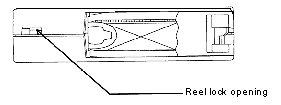
Figure 1: Location of One of the Two Reel Lock Tabs on the DLTtape Cartridge
Inside and near the center of this opening, you should see a small plastic tab. This is one of the reel locks. The reel locks can break if the cartridge is dropped. This may be the cause of any rattling sound you hear when you gently shake the tape cartridge. If this reel lock tab is not visible do not use the cartridge.
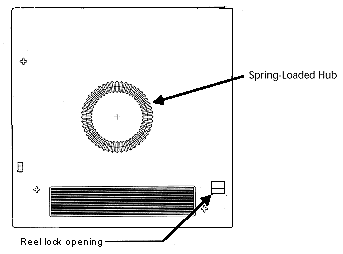
Figure 2: Location of Reel Lock Opening and Spring-Loaded Hub on Bottom of DLTtape Cartridge
Check the opening indicated in Figure 2 and ensure that the small plastic tab is partially visible. This is the second reel lock. The reel locks can break if the cartridge is dropped. This may be the cause of any rattling sound you hear when you gently shake the tape cartridge. If this reel lock tab is not visible do not use the cartridge.
Also located on the bottom of the tape cartridge is the spring-loaded hub. Verify that the hub is centered within the circular opening in the tape cartridge. Gently press the hub and make sure that it springs back into place. Make sure that it ends up centered within its circular opening.
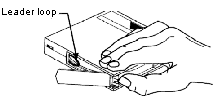
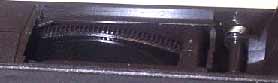
Figure 3: Opening the Door on a DLTtape Cartridge Showing Tape Leader Loop in its Correct Position
Open the door by holding the DLTtape cartridge as shown in Figure 3. On the right side corner of the tape cartridge there is a small tab in a cut-out portion of the cartridge. Using your thumb, gently lift up on the tab and swing the door open (Figure 3).
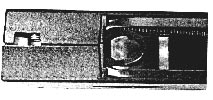
Inside the door, you will see the tape and cartridge leader loop. The loop should stick up about an eighth of an inch when viewed from the edge; the loop must be a closed loop. If the loop is torn, bent, pulled in, or not sticking up about an eighth of an inch, do not use the tape cartridge.
7. Figure 4 shows three different tape cartridge loop problems. No tape cartridge that exhibits any of the problems shown in the examples in Figure 4 should be used in a DLT tape system.
Example 1: "Swallowed" Tape Cartridge Leader
Example 2: Torn or Broken Leader Loop
Example 3: Tape is Loosely Wound
Figure 4 Three Examples of Tape Cartridges with Damage Visible During Visual Inspection
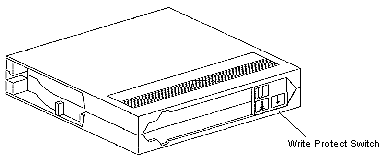
Figure 5: Location of Write Protect Switch
By following general handling procedures, conducting careful visual inspections of tape cartridges on a regular, ongoing basis, and making sure that tape cartridges are stored within their environmental limits, you will greatly reduce any chance that you will experience problems with your tape cartridges or cause damage to your DLT tape system. Respect your media as much as you do your data.
Specifications subject to change without notice
©1999 Quantum Corporation. All rights reserved. Quantum and the Quantum logo are trademarks of Quantum Corporation, registered in the U.S.A. and other countries. DLT, DLTtape, and the DLT logo are trademarks of Quantum Corporation. Any products mentioned herein are for identification purposes only and may be registered trademarks or trademarks of their respective companies.