Home | Contact Us | Submit Troubleshooting Info | Search | Help


    Output | Software Solutions | Proofing | Color, Screening and Calibration | Scanning | Digital Photography | Consumables | POS


Diagnosing Pneumatic Cylinder Problems


Product


all CTP devices


Component


Pneumatic cylinders


Symptoms


Cylinder will not push or pull properly.


Causes and Solutions


  1. Look carefully at the cylinder. There are two problems that can be easily diagnosed visually:
    • The cylinder is dented or has rods that are bent or abraded (or other obvious damage). If so, replace it.
    • The cylinder is being used incorrectly. If so, correct the layout or design. For example,
      • Insufficient piston area and/or air pressure to push or pull the object.
      • Overly constrained cylinder that puts a side load on the rod, jamming the piston.
      • Unsupported horizontally mounted cylinder that sags in the middle when the rod is extended.


  2. If no damage is evident from a visual inspection, check for air leaks using the Testing for Air Leaks procedure below. Leaks can be caused by:
    • Oil or water in the air lines that has washed the lubrication out of the cylinder. Since the lubricant cannot be replaced, the entire cylinder has to be replaced.
      Note:  It is a good idea to replace the air lines at the same time to eliminate any residual contaminants.
    • Damage to the rod and/or piston seals.
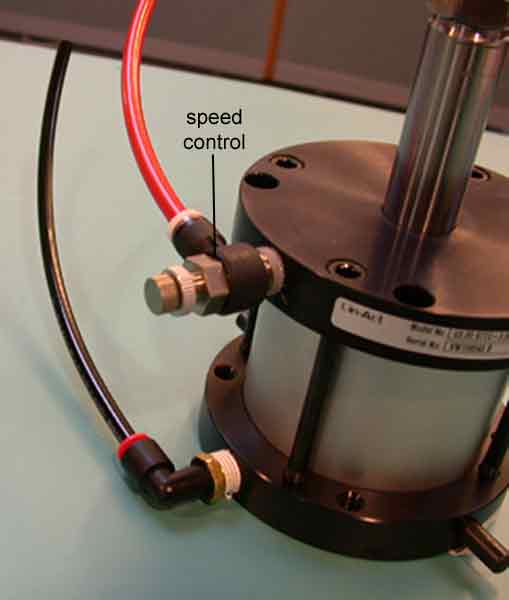
    • Wear in the cylinder due to excessive speed. Most cylinders will wear out if they travel more than 20 inches per second, although the SMC NCG series can go almost twice that speed. If the speed controls have been tampered with, reset them to original specifications.


    • speed control (through-bolt cylinder) - click to enlarge
    • For through-bolt cylinders, uneven or inadequate tightening of the bolts.


      Testing for Air Leaks

      Piston seal leaks | Rod seal leaks | Leaks through gaps

      Cylinders are more sensitive to leakage problems as the piston diameter (not stroke) gets smaller and the speed decreases. Any leak in a small diameter, slow-moving cylinder will be a larger percentage of the flow than in a large, fast-moving cylinder.

      click to enlarge click to enlarge

      Piston Seal Leaks

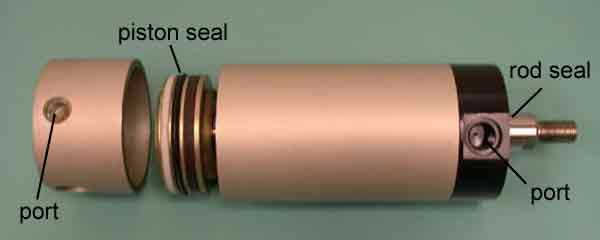
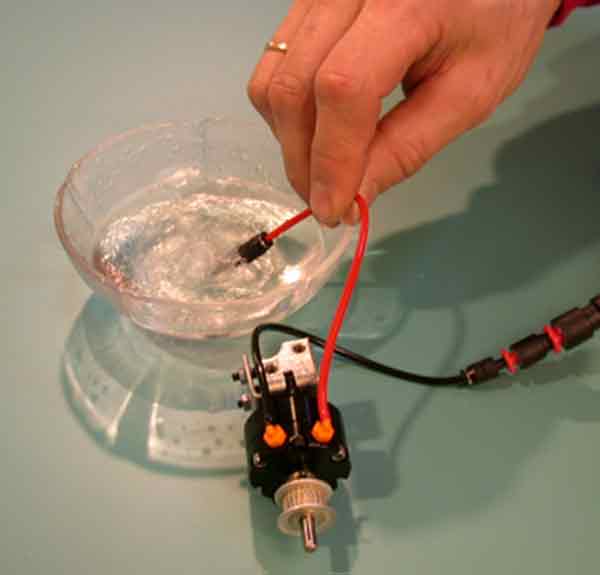
      To detect leaks past an internal piston seal:

      1. Disconnect the unpressurized air line.
      2. Attach a short piece of air line to the port.
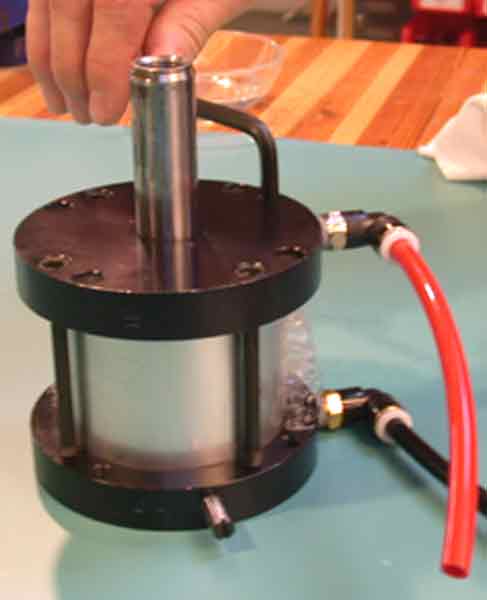
      3. Submerge the open end of the air line in water and watch for bubbles.

      4. An occasional small bubble is fine, but steady or violent bubbling indicates a serious leak. The other port must be tested in the same way since a different seal is in use with reverse pressurization.

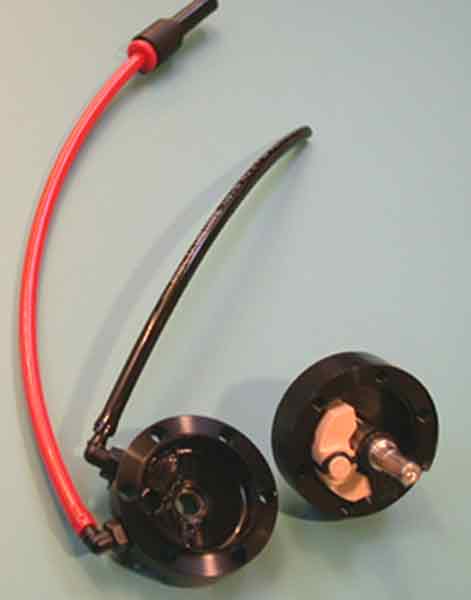
      test for internal piston seal leaking (rotating cylinder) - click to enlarge rotating cylinder opened - click to enlarge

      Rod Seal Leaks

      To detect leaks past a rod seal:

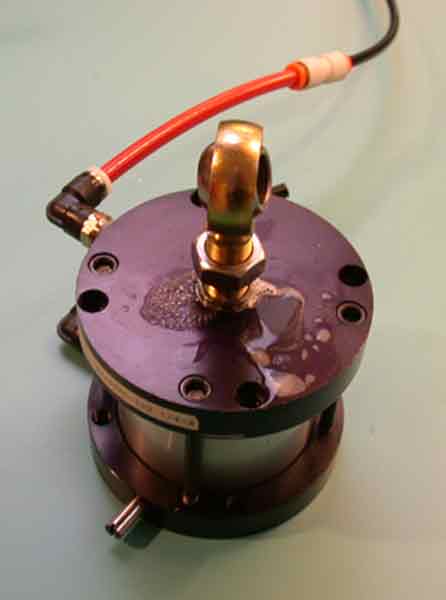
      1. Connect a pressurized air line to the rod retract port.
      2. Spray glass cleaner on the seal.

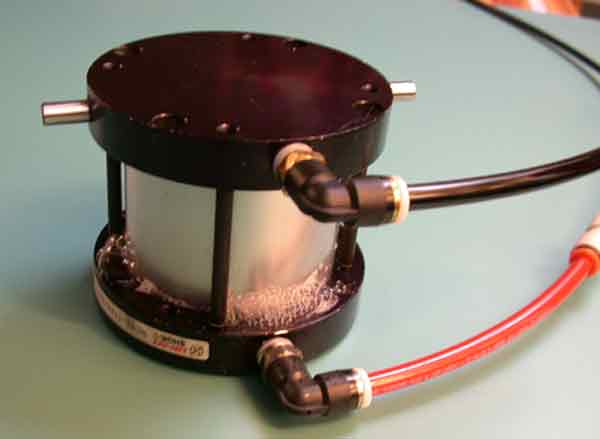
      3. If air is escaping, the cleaning fluid will foam up. The rod extend port must be tested in the same way. Also check that the rod moves freely with neither port pressurized.

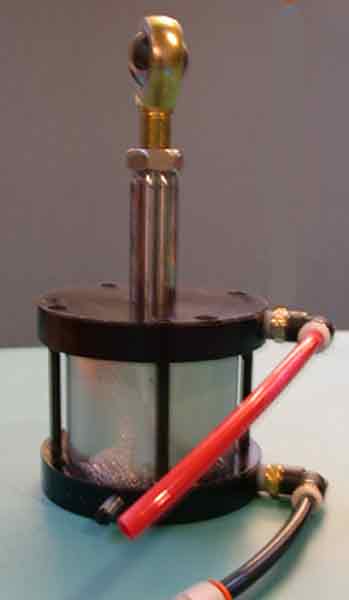
      test for rod end seal leaking, rod retracted (through-bolt cylinder) - click to enlarge test for rod end seal leaking, rod extended (through-bolt cylinder) - click to enlarge

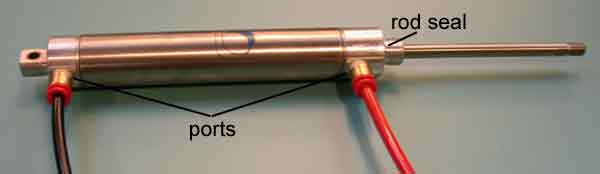
      If a serious leak is found, check the rod seal for damage.
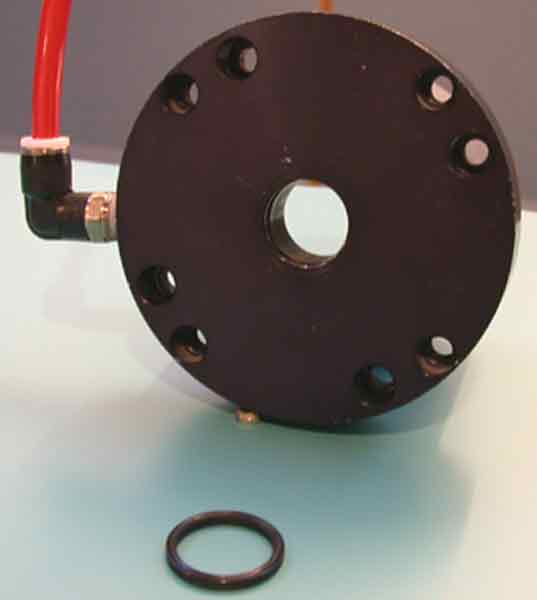
      rod seal - click to enlarge

      Leaks Through Gaps

      On through-bolt cylinders, leaks may also occur if the bolts are not evenly and properly tightened, or if the gasket between the tube section and the end plate is damaged.

      To detect leaks past gaps in through-bolt cylinders:

      1. Connect a pressurized air line to the rod retract port.
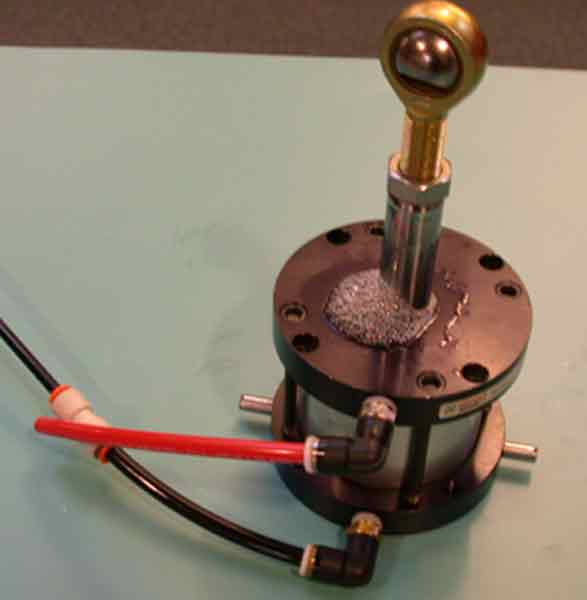
      2. Spray glass cleaner where the tube section and end plate meet.

      3. If air is escaping, the cleaning fluid will foam up. The rod extend port must be tested in the same way.

      test for gap leaking, rod retracted (through-bolt cylinder) - click to enlarge test for gap leaking, rod extended (through-bolt cylinder) - click to enlarge

      If a leak is found

      • First try tightening the four through bolts. Be careful to tighten them evenly.


      • tightening the through bolts - click to enlarge
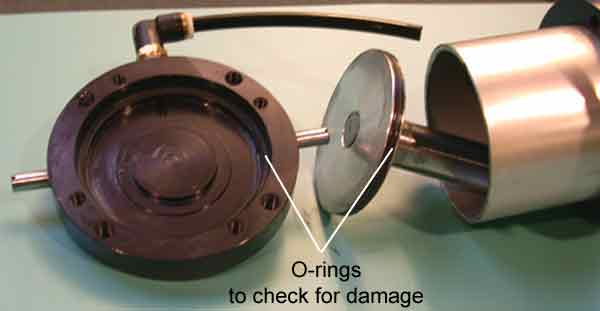
      • If the cylinder still leaks, check the gaskets and O-rings for damage.


      • gaskets to check for damage - click to enlarge

See also


Technical contact(s)
 

Don MacKay

Submitted by
 

Marek Zgrych

Date submitted
 

05 Mar 2003


    Copyright © 2005 Creo Inc. All rights reserved. Confidential. Back to top.